Le lancer de haches s’inscrit dans une longue tradition, majoritairement guerrière. Devenue non violente, cette expérience totalement originale vous place dans la peau d’un valeureux guerrier franc en pleine bataille ou d’un colon américain s’amusant lors d’un tournoi !
Les Francs, premiers guerriers à utiliser la hache comme arme de jet
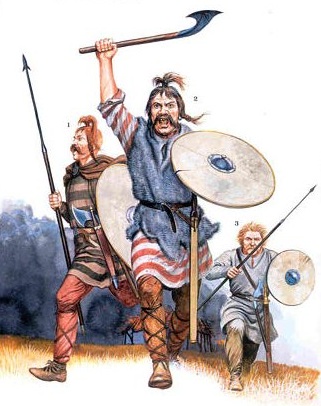 La fabrication des premières haches remontent à plus de 1,5 millions d’années. Elles furent rapidement utilisées comme arme de guerre mais il faut attendre le Vème siècle pour que le lancer de haches se développe comme technique de guerre. Ce sont les guerriers Francs (les élites, la technique était peu répandue chez les soldats de base) qui utilisèrent en premiers la Francisque comme arme de jet. Les soldats la lançaient d’une distance d’environ dix à douze mètres. La lame de la hache était lourde pour produire un impact important sur l’ennemi. L’arme n’était pas équilibrée comme peut l’être un javelot, elle n’avait donc pas une trajectoire très régulière, réduisant la portée et la précision. Cela demandait une grande dexterité. Les soldats disposaient de plusieurs haches, leur imposant une faible armure pour éviter d’être surchargés.
La Francisque, hache de lancer
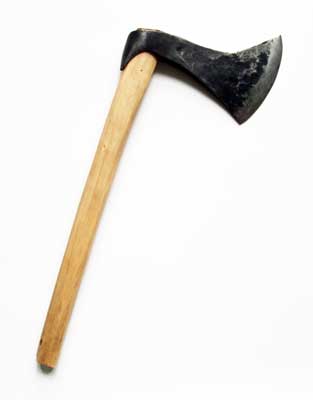 La francisque se reconnaît à la courbure en forme de S caractéristique du sommet du fer. Le bord inférieur de la lame s’incurve vers l’intérieur puis forme un coude avec le manche. La plupart des francisques ont un œil rond ou en goutte d’eau pour le passage d’un manche conique. Les lames de francisque mesurent entre onze et vingt-deux centimètres de long et pèsent entre 200 et 1 300 grammes.
Forgées d’un seul bloc, ces haches étaient très tranchantes et infligeaient de sérieux dommages. Elles pouvaient notamment briser un bouclier.
Inventée par les Francs, La Francisque s’est très vite répandue parmi les autres peuples européens : les Lombards, les Goths, les Burgondes et les Teutons.
Le lancer de haches aux Etats-Unis et au Canada
Les civilisations qui ont émigré aux Etats-Unis ont importé leurs outils et leurs traditions. Les haches ont d’abord été utilisées comme outils de survie et de construction. Plus tard, une fois les frontières stables et leurs constructions réalisées, les colons se sont convertis en fermiers. Ils s’affrontaient alors dans des tournois de lancer de haches, pratique issue de la culture Celte.
Le Tomahawk comme hache de guerre
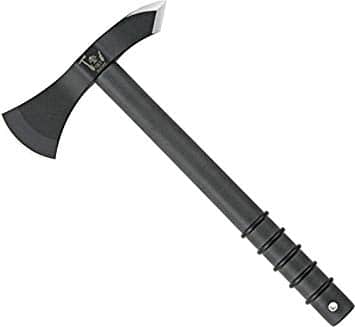 Ces petites haches ont été initialement fabriquées par les Indiens d’Amérique, en bois et en pierre. Les colons ont ensuite conçu leurs propres tomahawks, plus légers et plus petits, en développant de nouvelles techniques, notamment grâce à l’emploi d’acier.
Les Tomahawks ont été régulièrement utilisés par les soldats américains, de la guerre d’indépendance des Etats-Unis (1775-1783) jusqu’à la Bataille de Little Bighorn (1876), mieux connue par les américains sous le nom de La Dernière Résistance de Custer (Custer’s Last Stand).
Les Cheyennes et les Sioux, réunis dans une coalition à l’initiative de Sitting Bull, ont vaincu le 7e régiment de cavalerie de l’armée américaine du lieutenant-colonel George A. Custer. Chaque camp a largement utilisé des Tomahawks. Mais, contrairement à la croyance populaire, les Amérindiens ne jettaient pas leur hache dans la bataille. C’était leur arme préférée pour le combat rapproché.
Les haches dans les guerres modernes
Bien que l’évolution de la technologie ait rendu l’utilisation des haches obsolète, croyez le ou non, les haches sont encore largement répandues dans l’arsenal militaire.
En 1966, Peter LaGana, ex U.S Marines et vétéran de la Seconde Guerre mondiale, fonda l’American Tomahawk Company et fabriqua environ 4000 tomahawks de 1966 à 1970, principalement vendus aux forces américaines au Vietnam. Ce modèle était très apprécié des soldats pour les combats rapprochés dans la jungle.
En 2000, Andy Prisco proposa à LaGana de rouvrir l’American Tomahawk Co et de reprendre la production de tomahawks. Priscos commercialisa plusieurs modèles de tomahawks anciens et plusieurs modèles de tomahawk modernes à manche synthétique ou fabriqués dans une seule pièce d’acier.
Aujourd’hui, de nombreuses unités des forces spéciales américaines utilisent régulièrement le tomahawk en Irak ou en Afghanistan. Au delà de l’utilisation en combat rapproché, les soldats s’en servent pour creuser des tranchants, défoncer des portes, retirer des obstacles sur la route ou encore faire sauter des mines terrestres.
La cognée et les haches de bûcherons
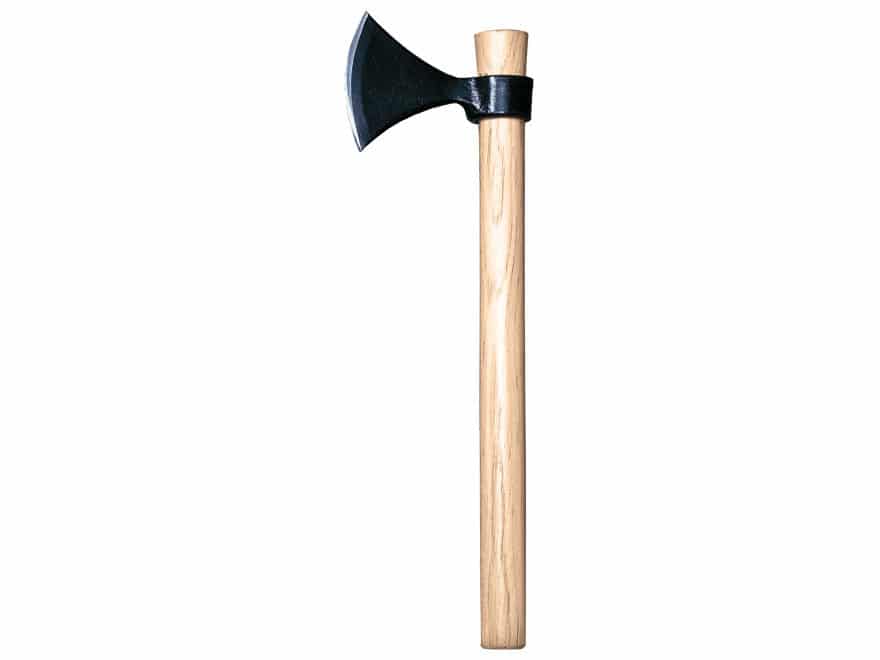 La cognée – d’où nous tirons notre nom – est un modèle de hache de bûcheron. Il existe différents modèles de hache pour les bûcherons : les haches d’abattage (pour abattre un arbre), les haches d’élagage, les haches à fendre, le merlin (pour fendre les bûches) et les hachettes.
La Cognée est une hache d’abattage ou à fendre et s’utilise à deux mains. Son tranchant long et fin permet au bucheron de frapper loin dans le tronc des arbres. Son grand manche en bois, par effet de levier, donne une puissance décuplée aux bûcherons.
Le lancer de haches aux Cognées
C’est donc une activité chargée d’histoire, d’abord guerrière puis ludique. Venez vous aussi vous inscrire dans cette lignée et faites surgir le fier bûcheron canadien aux Cognées ! Réservez vite votre session de lancer de haches aux Cognées
 English
  Français